
ToBeDefined.ai · in development
We hear drones before it goes bang.
Detect, report, prove: the platform for the KRITIS-Dachgesetz, Germany’s critical-infrastructure law. From Kösching, hosted in Germany.
Pilot in winter 2027/28 at 6 sites
01 · KRITIS-Dachgesetz · in force since 17 March 2026
A new law obliges critical-infrastructure operators. To detection devices, too.
For the first time, physical protection of critical facilities is mandatory: for 1,434 facilities in energy, water, health, transport and food, plus the same EU directive in all 27 member states.
Duty 1 · § 12
Analyse risks
at least every 4 years
Duty 2 · § 13
Protect the facility
resilience plan, expressly with detection devices
Duty 3 · § 18
Report incidents
within 24 hours to the BBK
Duty 4 · §§ 16, 17
Prove everything
on request of the authority
And if not?
Management is personally liable.
§ 20 · plus fines up to 1 million € (§ 24)
KRITIS-Dachgesetz, BGBl. 2026 I No. 66; implements EU Directive (EU) 2022/2557 (CER); BSI figures per sector as of 31 Dec 2023
02 · The problem · Leipzig/Halle, 5 August 2026
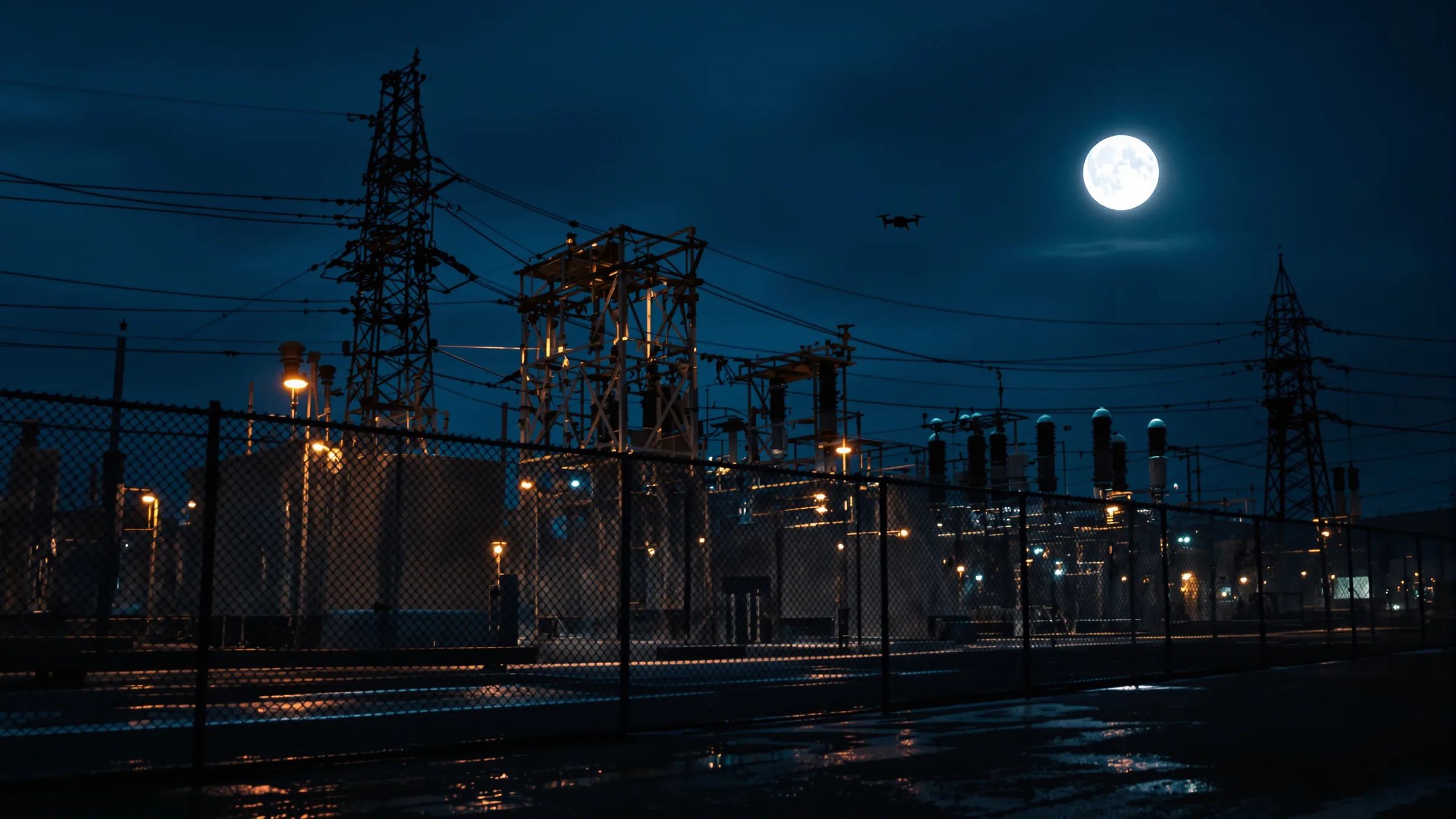
A drone carrying explosives. Right next to a cargo aircraft.
It was found by an employee. Not by a sensor.
That was an airport with security technology. A substation usually has nothing at all.
- 747
- drones over critical infrastructure, January to August 2026
- 54.7 %
- of operators have already had drones over their site
- 46.5 %
- have no detection at all
t-online, 5 Aug 2026 (LKA Saxony); BKA situation update on hybrid threats, end of August 2026; survey by BSKI and Droniq, August 2026, 104 operators
02 · The problem · What is at stake
Every fence protects more than one site.
When a substation goes down, the lights go out behind it: in the hospital, at the waterworks, in the cold chain. Whoever attacks one facility hits everyone who depends on it.
Illustrative image

02 · The problem · Why radio is not enough
The most dangerous drones don’t transmit. But they hum.
-
Home-built
No Remote ID, own radio protocols. Invisible to detectors that rely on a model library.
-
Autonomous
Flies GNSS waypoints. No control signal, no video link.
-
Fibre-optic
Steered over an unspooling cable, known from Ukraine. Transmits nothing.
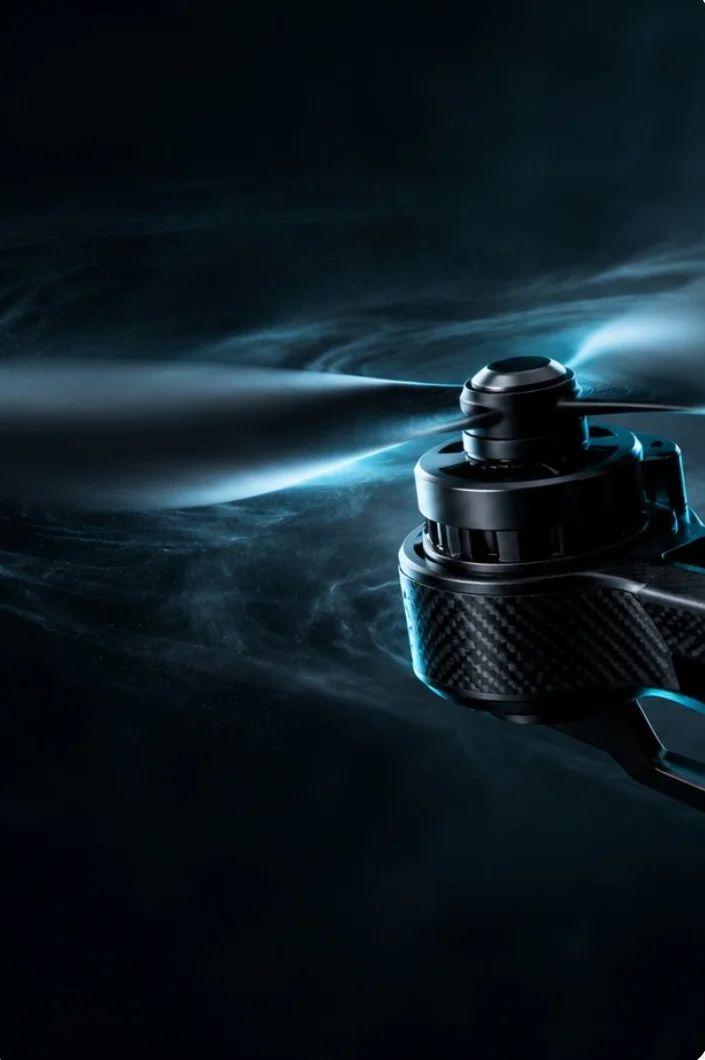
IISS study, July 2026 (via ZfK): low-flying drones without electronic identification are the hardest to track
02 · The problem · The gap
Four suppliers. Zero connection. One boss who is liable.
-
Consultant
Risk analysis and plan, once, as a project.
Missing: ongoing updates
-
GRC software
Documents and deadlines.
Missing: link to the technology on site
-
Sensors
Detect drones, often six figures per site.
Missing: report and evidence
-
Control room
Alerts around the clock.
Missing: the report to the authority
- Alarm
- Incident file
- Report within 24 h
- Evidence
- Back into the risk analysis
The law demands this chain. Today every operator builds it themselves, by phone and spreadsheet.
Sensor prices from public information 2026: Security Airline 120–250 k€, Droniq from 49 k€ per site
03 · The solution from one source
TYTO listens and writes the report at the same time.
-
01
Detect
Acoustics, radio, Remote ID, camera. Including drones that don’t transmit.
-
02
Confirm
Alarm only with two sources. AI filters out birds.
-
03
Alert
Pre-alert to the phone, control room 24/7 only on confirmed detection.
-
04
Report
AI writes the 24-hour report to the BBK, a person releases it.
-
05
Prove
Evidence file at the push of a button, back into the risk analysis.
On site: proven sensors, bought in and integrated by us into hub, sense units and camera.
The heart: our own software for sensor fusion, AI and platform, hosted in Germany.
It hears everything. It transmits nothing. It never attacks.
Acoustics never stores sound, only features · control room per DIN EN 50136 · open SAPIENT interface (BSI Flex 335) for future defence
03 · The solution · The product
Drone protection for the price of a small car.
Package 1 · Compliance
22,800 €
+ 450 € per month
“You meet the law, verifiably.” Acoustics, radio, Remote ID, daylight camera.
Package 2 · Protection 24/7
50,900 €
+ 890 € per month
“The control room is alerted automatically, at night too.” Plus thermal imaging and radio direction finding.
On the market today
120–250 k€
for comparable site protection, without report and evidence.
Five times cheaper: bought-in sensors, our own software.
The obligation never ends.
Net, including installation and control-room set-up · market prices: Security Airline, price overview 2026
04 · Why us
We come from sensor data fusion. From hardware through software into series production.
-
Background
Series experience
Driver assistance in automotive: sensor packages integrated, tested, released and brought into series production.
-
Shaped by
Tested under pressure
Swarm Drone Challenge: 14 weeks under pressure, 2nd of 22, best German team.
-
Expertise
Drone detection
We have built drones ourselves, located them and flown them in a swarm. We know them from the other side.
-
Vicki Lichtenegger
Co-Founder & CEO · project and series
-
Oliver Tiedemann
Co-Founder · sensor fusion, AI
-
Sascha Dirbach
Co-Founder · software development, platform
-
René Melzer
Hardware integration, embedded
-
Thomas Letze
Software development, alarm chain
We bring TYTO to market. With experienced developers and series experience.
Team and founders05 · Market size
Not whether, but who comes first.
Starting market Germany
4,400
sites: 1,434 mandatory facilities + around 3,000 with the same risk
138 m€ initial equipment · ~45 m€ operation per year
Target market EU
24,000
sites: the same CER directive in all 27 member states
~750 m€ initial equipment · ~240 m€ operation per year
BSI figures 31 Dec 2023; EU extrapolated by population (Eurostat); avg. 31,200 € + 7,000 €/year per site; TED 265921-2026; MarketsandMarkets
06 · Competition
Everyone builds puzzle pieces. We build the picture.
| Criterion | TYTO | Dedrone | Droniq | Security Airline | GRC, consultants |
|---|---|---|---|---|---|
| Duties under the KRITIS-Dachgesetz | complete | no | no | concept, audit | documents only |
| Acoustics for radio-silent drones | every package | option | no | no | no |
| Control room included | yes | interface | alerting | yes, VdS | no |
| Data only in Germany | yes | US group | cloud | n/s | depends on tool |
| Price per site | 23–51 k€ | 6–7 figures | from 50 k€ | 120–250 k€ | 10–75 k€ / year |
Public information, October 2026: manufacturer pages Droniq, Security Airline, Dedrone/Genetec; orbiq GRC comparison 2026 · n/s = not stated publicly
07 · Outlook
From prototype to the first fence.
- Q1 2027 Prototype on the robots of our first partner
- Winter 27/28 Pilot at 6 sites, measured values, references
- 2028 First paying customers
- 2030 First EU country
- 2032 1,500 sites
Plan, not a forecast
Our vision
Every critical facility in Europe hears what is coming.
Today the ears at the fence. Tomorrow the data source for every control room and every future defence: mobile units for patrols and events, a platform for third-party sensors too.
Pilot in winter 2027/28
Six sites. Measured values. References.
We are looking for operators at whose fence TYTO listens through the first winter.